
Molly Dance
East Anglian midwinter dancing, deliberately rough around the edges.
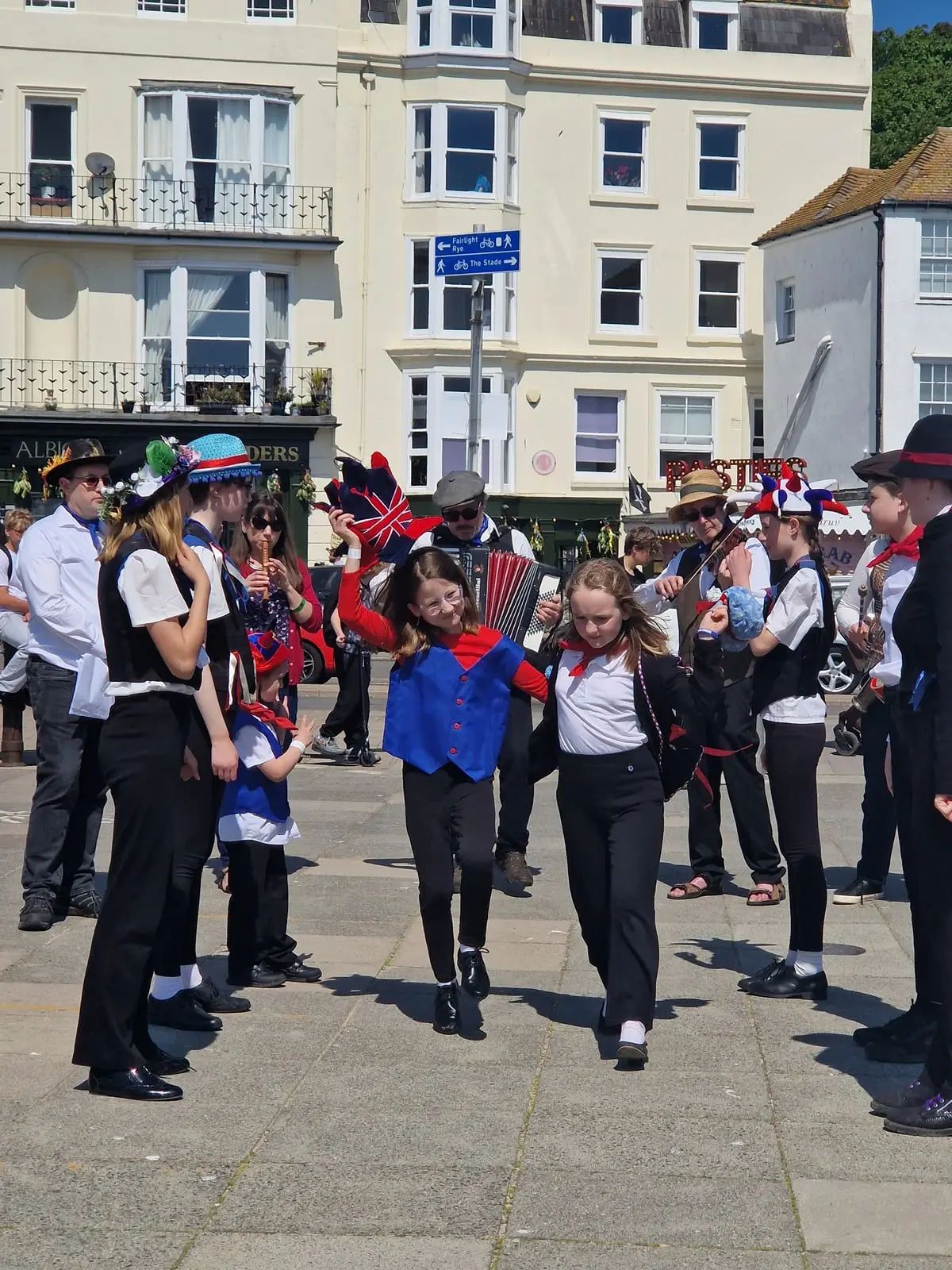
Molly dancing comes from East Anglia, where it was danced in midwinter — traditionally around Plough Monday, the first Monday after Twelfth Night, when farm workers had little work and went out dancing to raise money.
Dancers disguised themselves so they would not be recognised by the neighbours they were collecting from, and one dancer in the team dressed as a woman: the Molly the dance is named after. The style is deliberately heavier and rougher than Cotswold Morris, danced in work boots rather than soft shoes.
The tradition had almost died out by the middle of the twentieth century and was revived from a small number of collected dances, so modern teams write a good deal of their own material — which makes it one of the most inventive styles we dance.